
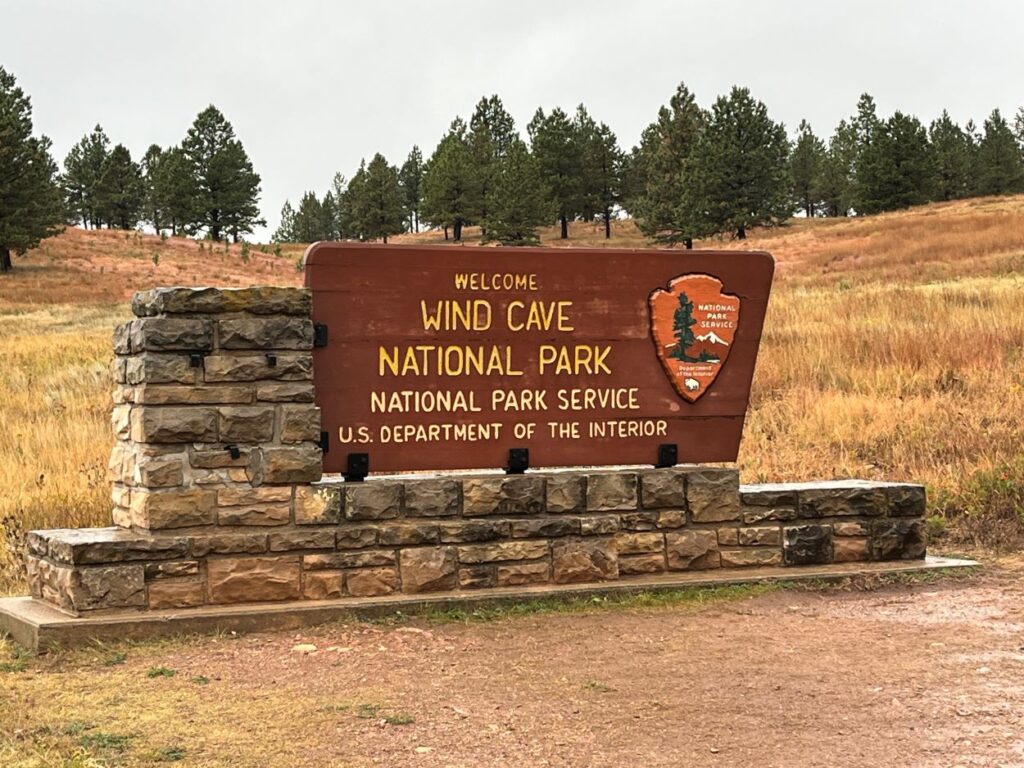
Wind Cave National Park was the final chapter of this Dakotas road trip. Brad and I have a soft spot for caves, although at this point in our life we prefer the kind where you don’t have to fold yourself like a camp chair to get through. We arrived expecting another familiar walk through cool passageways and pretty formations.
Instead, Wind Cave turned out to be unlike any cave we’ve experienced before. It’s quiet in its own way, full of strange honeycombed patterns and long, looping stories written in stone. Above ground, the rolling prairie added a whole second act we hadn’t anticipated.
We settled into the campground for two nights, giving ourselves a day and a half to explore this curious, double-layered park. What we found surprised us in all the best ways.
What Makes Wind Cave National Park Special
Wind Cave is a park with two beautiful worlds in one.
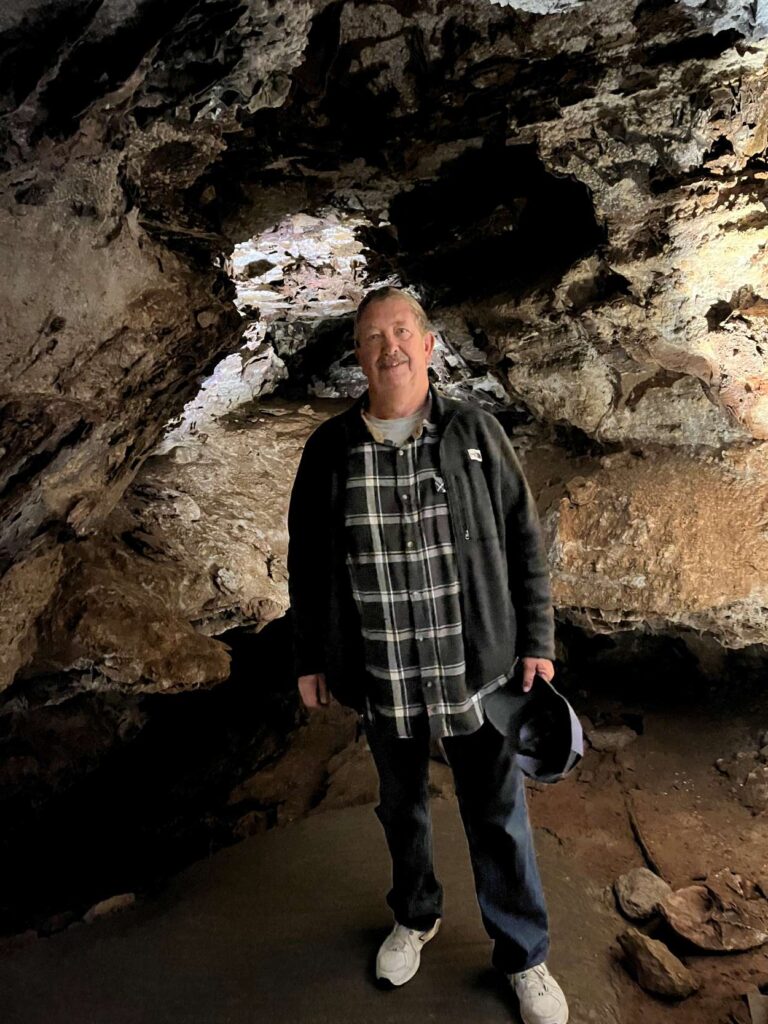
Underground, miles of cave passages are lined with the cave’s signature boxwork, a delicate lattice you won’t find in most caves. It is completely different from the big chamber-and-stalactite caves many of us know.
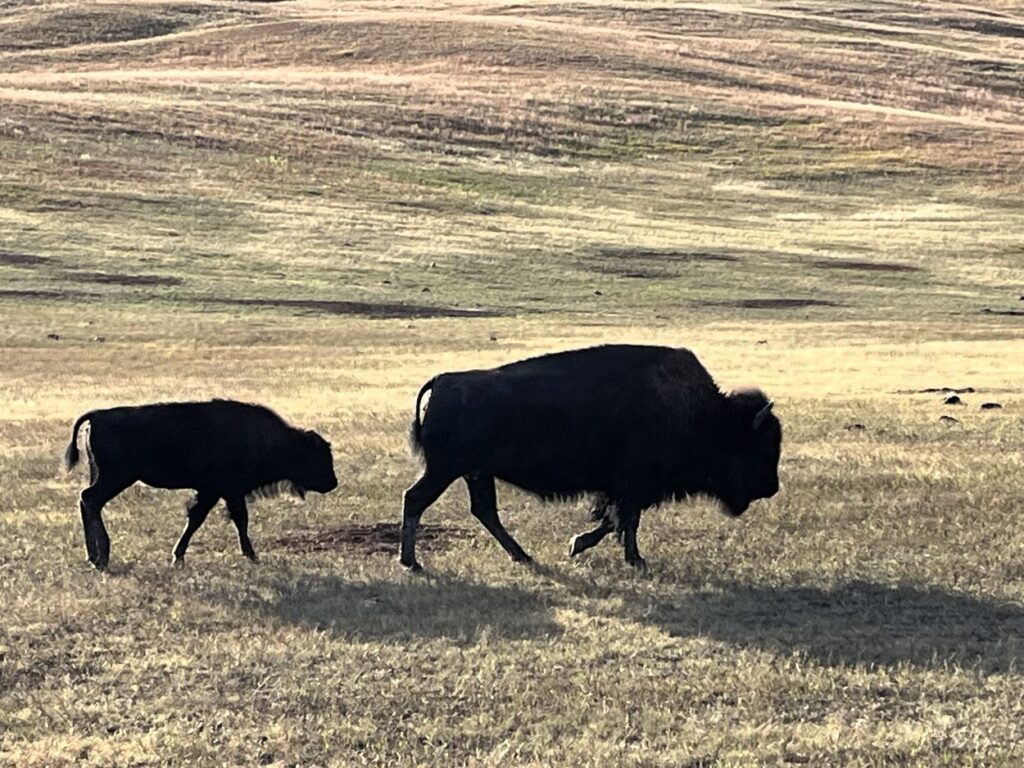
Step back into daylight and the prairie takes over: bison grazing, prairie dogs chattering, and wide grasslands stretching to the horizon. That pairing of rare geology below and quiet prairie beauty above is what makes Wind Cave stand apart.
Planning Your Visit to Wind Cave
Wind Cave may look quiet from the outside, but the cave tours fill quickly. Most tickets are sold online in advance, and that’s definitely the easiest way to lock in your visit. Not every tour is offered every day so check out the schedule and ticket prices for Wind Cave here.
But if the online tickets are gone, there’s a reliable workaround we picked up from fellow travelers earlier in the week. The ticket office releases a small batch of first come, first served spots each morning. We were advised by our new friends to arrive by 7:30, about half an hour before the office opened. A small crowd already forming. By the time the windows slid open, a couple dozen people were in line, swapping travel stories and comparing routes. The early start paid off. We snagged tickets for the very first tour of the day.
If you’re visiting on a weekend or during the busy summer months, plan to arrive even earlier. These standby morning tickets disappear fast.
Also be aware that most cave tours involve hundreds of stairs and narrow sections. Luckily the tour progresses at a wandering pass so the stairs weren’t exhausting for us. Accessible tours are offered, but availability is limited and they book quickly. If accessibility is a priority, reserving ahead is essential.
Inside the Cave: A Whole Different World
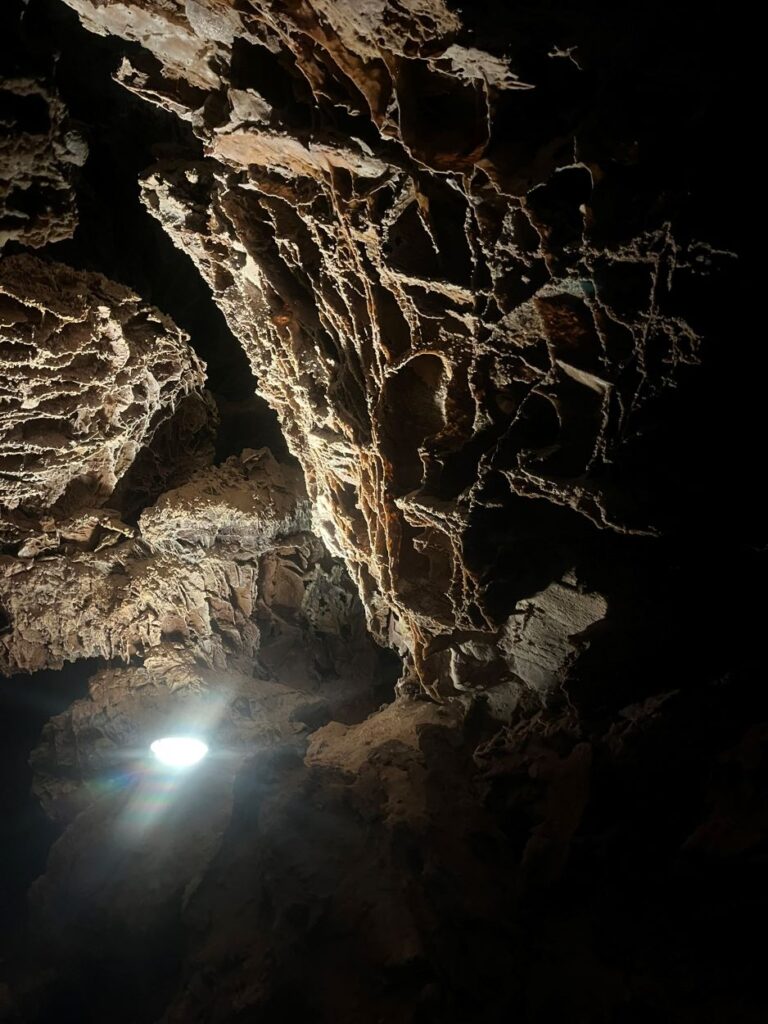
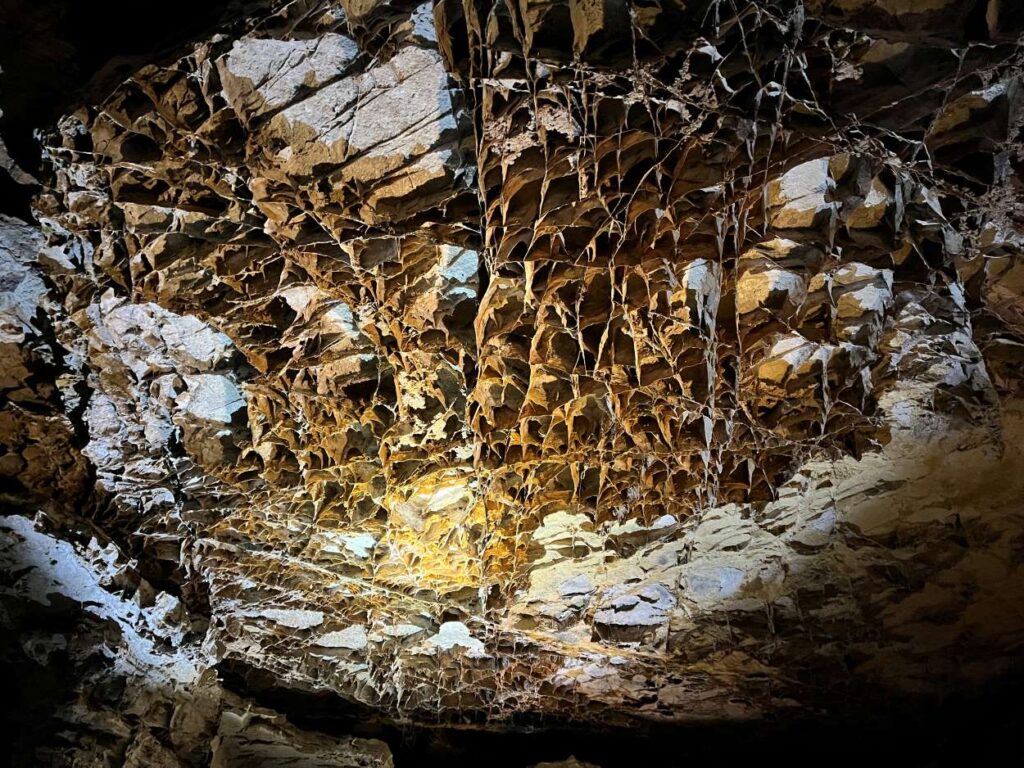
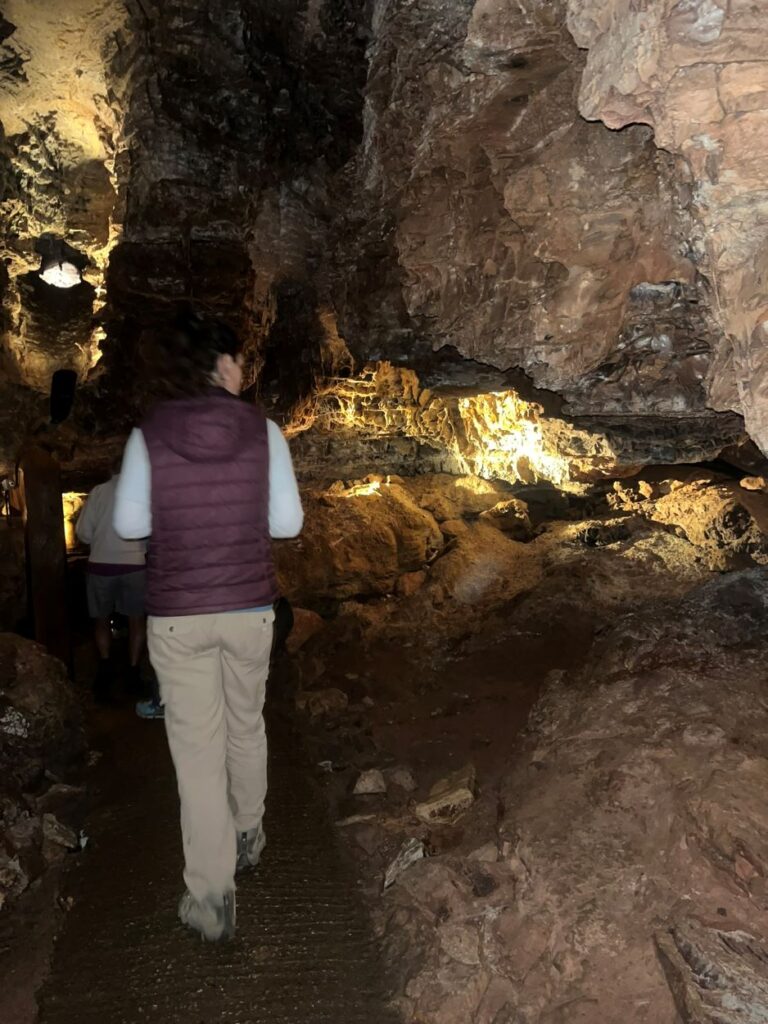
In Wind Cave you won’t find towering chambers or dramatic stalactites and stalagmites. Instead, the cave winds through a maze of tight hallways and unexpected corners where the star of the show is the boxwork. This thin, honeycomb-like fins of calcite fill entire walls and ceilings. It’s one thing to see photos, but standing inches from it feels strangely otherworldly.
The tours move at a relaxed pace, but be prepared: even the standard routes include hundreds of stairs and a few narrow spots. Not claustrophobic crawlspaces, but enough to keep you attentive to your footing. The rangers do an excellent job balancing geology with storytelling, making it easy to imagine the cave forming layer by layer beneath the prairie.
What Is Boxwork?
Boxwork is the signature feature of Wind Cave, and it’s unlike the formations most travelers expect underground. Boxwork forms when thin veins of calcite fill cracks in the limestone. Over time, the surrounding rock erodes away and the calcite veins remain, creating delicate, lacy patterns that look almost hand-carved.
Wind Cave has the largest concentration of boxwork in the world, which is why the usual “dripstone” formations take a back seat here. What you’re exploring is more like a natural stone latticework, preserved in a place where conditions stayed just right for millions of years.
Above-Ground Adventures on Wind Cave’s Prairie
While the cave is the headline act, the surface of Wind Cave is just as memorable. The prairie stretches out in every direction, alive with animals that seem to materialize straight out of the grass.
On our drive in, we passed sprawling prairie dog villages. Dozens of little heads popped up and down like they were running their own neighborhood watch. A few chattered at us with the confidence of creatures one-tenth the size of Charlie.
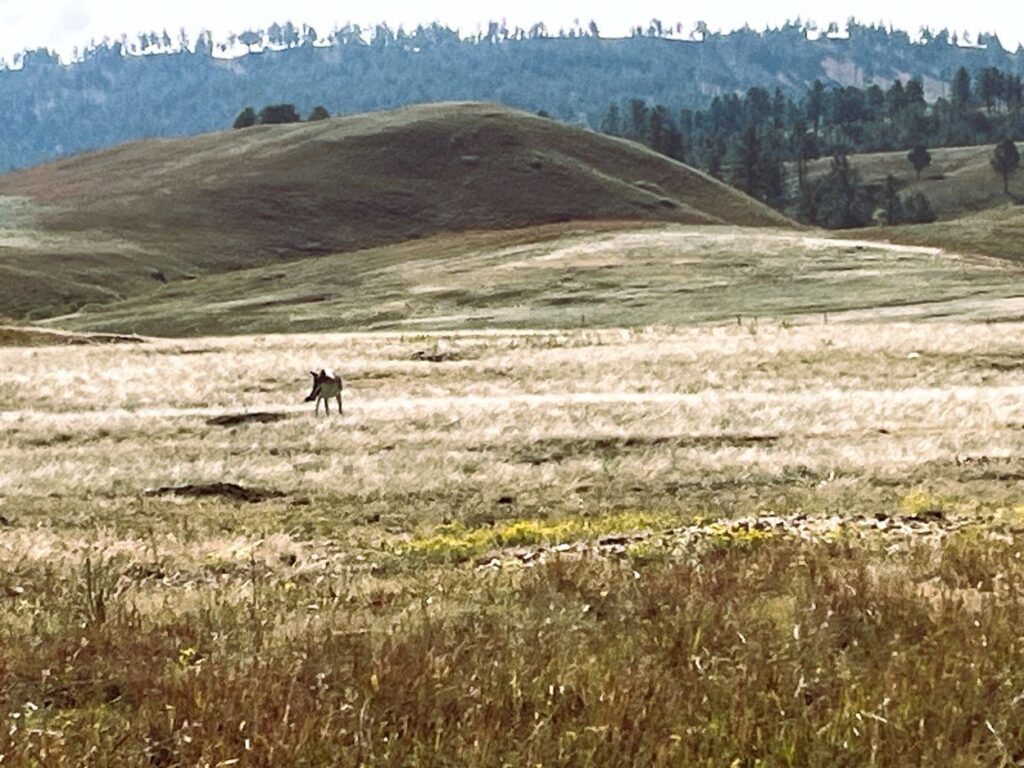
One evening, I took Charlie for a walk on the Elk Mountain Trail, a gentle one-mile loop that starts right at the campground. The trail weaves through open grasslands, simple but beautiful, with long views that glow in the late light. We were feeling smug about our peaceful little stroll until we crested a rise and spotted a bison stretched out in the grass about 50 yards ahead. Rather than risk Charlie barking at the magnificent beast, we turned around and eased our way back the direction we came.
Dogs are allowed on this trail, and it’s a lovely one. There are 30 more miles of trails throughout the park that wander through the prairie and forests. Just don’t forget that you’re a guest in someone else’s home as you will likely encounter wildlife enjoying their day as you hike. That’s part of what makes exploring Wind Cave’s surface so captivating.
Camping and Lodging for Wind Cave National Park
Hotels, Motels and more are Nearby
You’ll find the town of Hot Springs SD just outside the gates of Wind Cave National Park. Here you can look for more traditional hotels and also find quite a few rental properties. If you want to go for a more traditional South Dakota experience it is a short drive to the historic lodges in Custer State Park. They are a unique vacation experience where you can sleep in President Coolidge’s “summer White House of 1927”.
Camping When You Visit Wind Cave
We were surprised to find the campground inside Wind Cave National Park park easy to book at the last minute in September. However for a summer visit when traffic is heavy it’s best to plan ahead and book your site in the Elk Mountain Campground on Recreation.gov. We found flush toilets and potable water in the campground but no other amenities or hookups. Backcountry camping is fairly limited, but offers pretty cool views of the prairie if you want to rough it a bit in your tent.
If you prefer a little more luxury in your campsite, we also spent 4 nights in Custer State Park where you have hot showers, electric and water hookups plus dump stations. It’s pretty sweet camping! And because this is a popular summer vacation spot you’ll find a plethora of full service RV parks.
While we didn’t boondock much on this trip, I was able to find quite a few free camping options in the surrounding National Forest. Caution though, if it has been raining, a lot of these spots become inaccessible because the mud here can become a slippery mess that even our 4WD struggled with.
Nearby Highlights & Easy Add-Ons
Wind Cave sits in the middle of a cluster of fascinating places, making it an easy park to pair with other adventures.
Unique Places to Explore Near Wind Cave
Custer State Park
Just up the road, this park is all rolling hills, granite spires, and wildlife galore. The bison herd here is famous for a reason. And the scenic drives offer some of the best Black Hills scenery, including the drive through the Needles with narrow winding roads and tunnels. You’ll want to stay a few days so check out the gorgeous historic lodges and spacious campgrounds here. We camped in Custer State Park for 3 nights before moving on to Wind Cave. It is one of my favorite places to explore.
Crazy Horse Memorial
Still in progress but already impressive, Crazy Horse is an evolving work of art carved into the mountain. The museum and cultural exhibits add depth far beyond the massive sculpture.
Jewel Cave National Monument
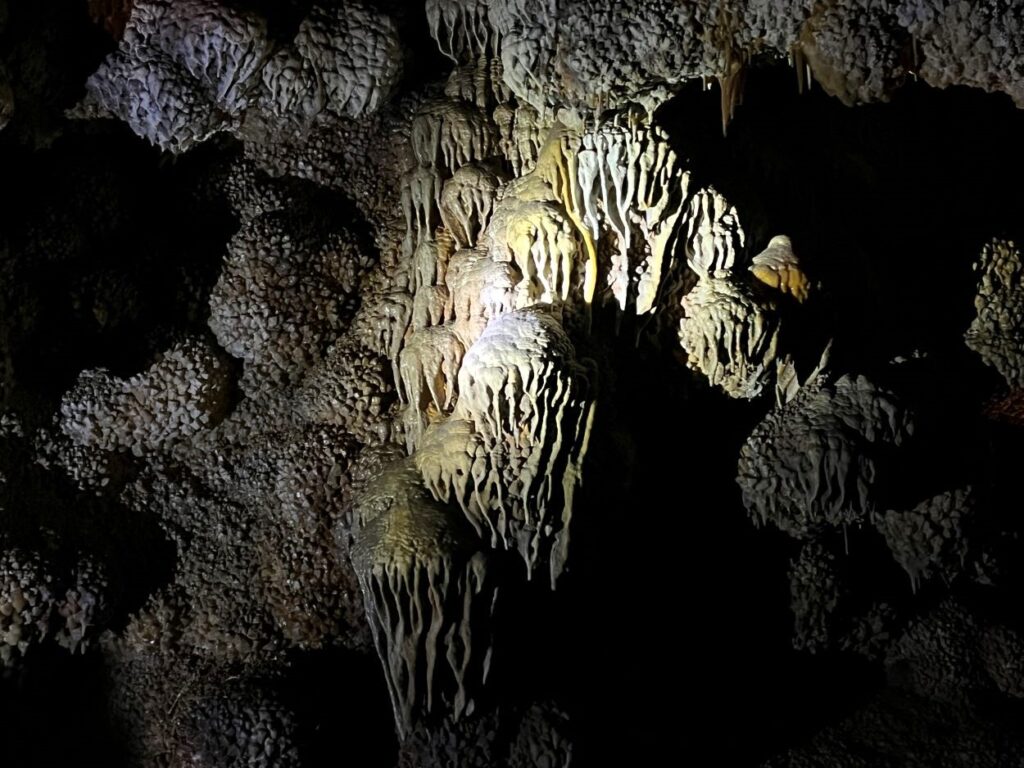
A perfect companion to Wind Cave, Jewel Cave brings the sparkle. Its formations are more traditional, with gleaming “jewels” of calcite that live up to the name. Jewel Cave is a quick drive from Custer State Park making it an easy addition to your trip.
Mount Rushmore
You’ve seen it in photos, but standing beneath the carving has a certain gravity. It’s worth a stop at Mount Rushmore for the history. We did not stop on this trip since it is not very dog friendly, but I definitely recommend a stop if you have not experienced this dramatic setting. The Sunset Lighting Ceremony has gotten rave reviews from many of our friends.
The Mammoth Site
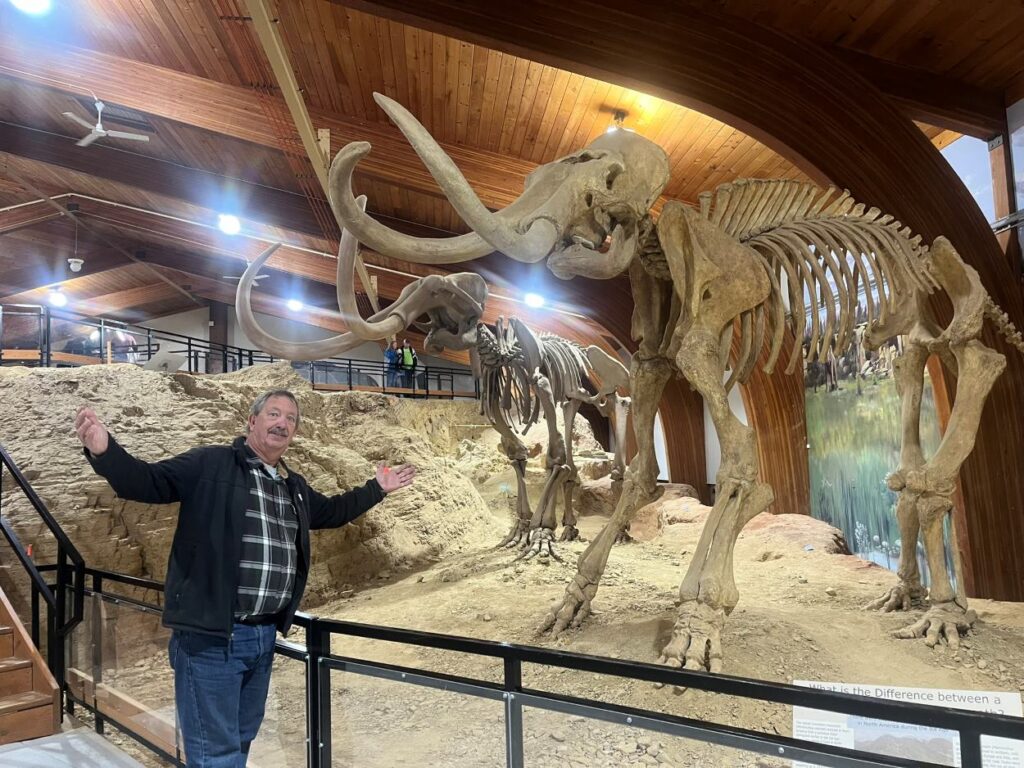
In nearby Hot Springs, this active dig site showcases dozens of Ice Age mammoths discovered in a collapsed sinkhole. You can watch scientists working and get unusually close to the bones. We spent several hours exploring this unique spot and were truly amazed at the size and number of these creatures found at The Mammoth Site.
Nearby Towns Worth a Stop
Custer
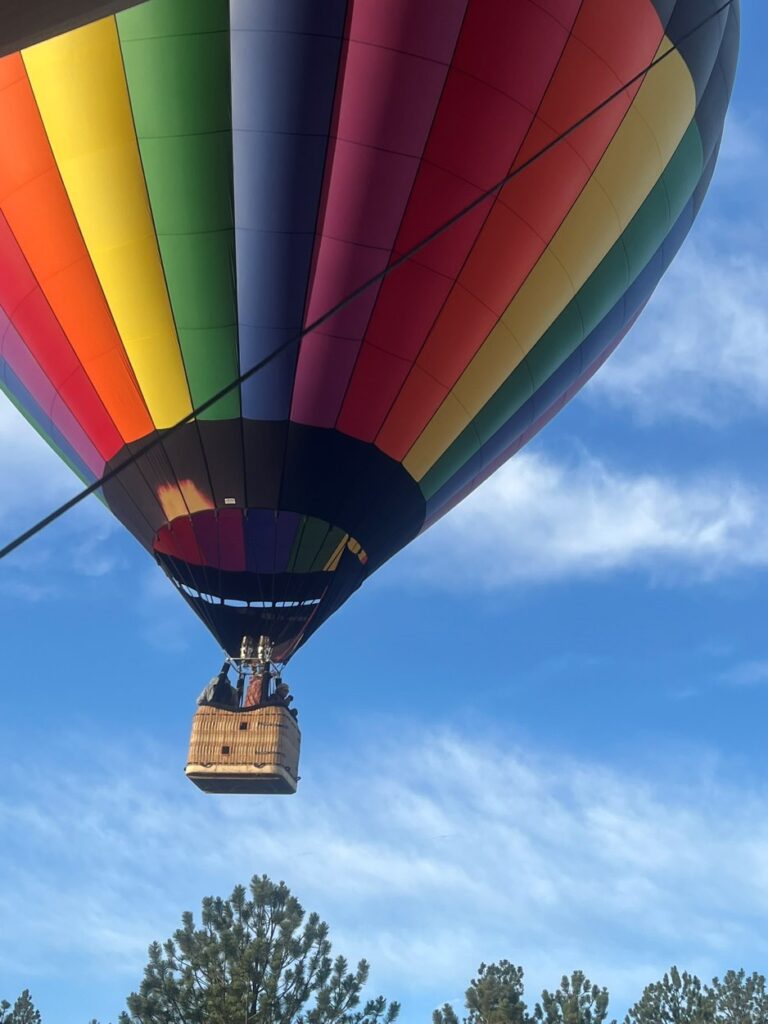
A lively hub with easy access to everything in the southern Black Hills. One of our trip highlights was a hot air balloon ride where we drifted above the Black Hills at sunrise. Damien, our pilot and owner of Black Hills Hot Air Balloon took us on a tour unlike anything you would see from the ground. I was extremely happy with Southern Hills Animal Clinic where we boarded Charlie so we could enjoy that amazing experience. Later, we found excellent pizza and beverages at Mt. Rushmore Brewing Company.
Hot Springs
A practical and pleasant stop for restocking groceries, grabbing a shower, or giving your pup a romp at the dog park. We also spent a relaxing afternoon in the city’s historic hot spring pool. Its considered a “warm” pool with a natural steady temperature of 87 degrees. It was the a perfect place to grab a shower after weeks of camping and then soak in the pool.
Wind Cave Pro Tips
- Arrive early for first-come, first-served cave tours, at least 30+ min before opening.
- Book online if possible; most tickets sell out in advance.
- Wear comfortable shoes—hundreds of steps on most tours!
- Keep distance from wildlife; bison are unpredictable.
- Elk Mountain Campground: last-minute friendly, small sites, clean toilets & running water.
- Dogs allowed on some trails—keep pets safe around wildlife.
- Nearby fun: Custer for balloon rides & pizza, Hot Springs for soaking & dog parks.
Looking back at our Dakota’s Road Trip
Our Dakota’s Road Trip was full of surprises. We started in the far North at Theodore Roosevelt National Park where we discovered an unexpected beauty. After wandering through the Dakotas, Wind Cave National Park was the perfect final stop. It offered a completely different experience than any other cave we’ve explored and included a unique look at the prairies and wildlife of South Dakota.
Camping at Elk Mountain in Wind Cave National Park made our visit easy and stress-free, giving us the flexibility to enjoy both the cave tours and the scenic surroundings at our own pace. Wind Cave is a great base for exploring the Black Hills because of the close proximity to many other adventures.
Whether you’re a seasoned cave explorer or just looking for a unique National Park experience, Wind Cave offers something special. Don’t forget to bring your curiosity, your camera, and a healthy respect for the local wildlife!
