After camping in most of the National Parks, few sites have stayed in our hearts like these. These are the campgrounds where the camping experience feels as special as the park itself. I’ve realized that not all campgrounds are created equal. Sure, some have nice amenities or pretty views, but every once in a while you stumble upon a campground that is an experience all on its own.
These are the unforgettable National Park campgrounds I can’t stop thinking about. The ones where we fell asleep to the sound of crashing waves, woke to elk outside our tent, or enjoyed a sunset perched on top of giant boulders.
If you prefer solitude, scenery, and the feeling of being part of the park (not just parked in it), these are the gems worth adding to your bucket list.
1. Gold Bluffs Beach – Redwoods National Park, California
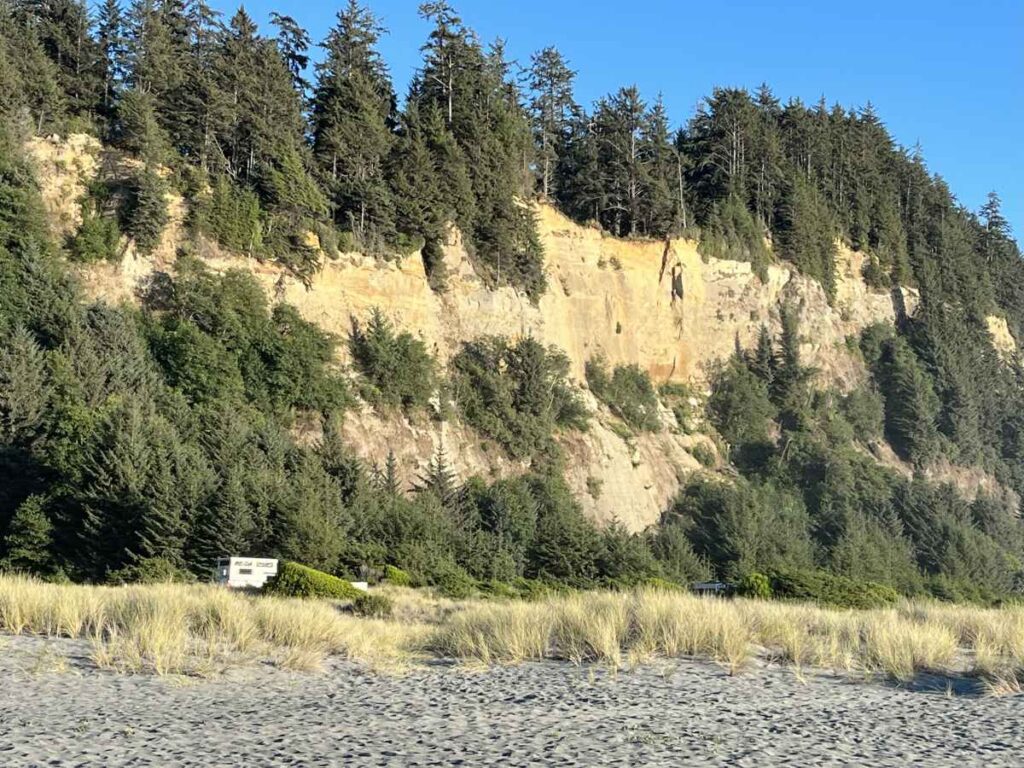
Wake up to the sound of ocean waves and the sight of Roosevelt elk wandering through camp—it doesn’t get much more magical than this. Gold Bluffs Beach Campground sits right on the Pacific Ocean, with tent and small camper sites just steps from the sand. While the beach many not be what you imagine when you think of Redwoods, this campground is an essential stop on your Redwood National Park itinerary.
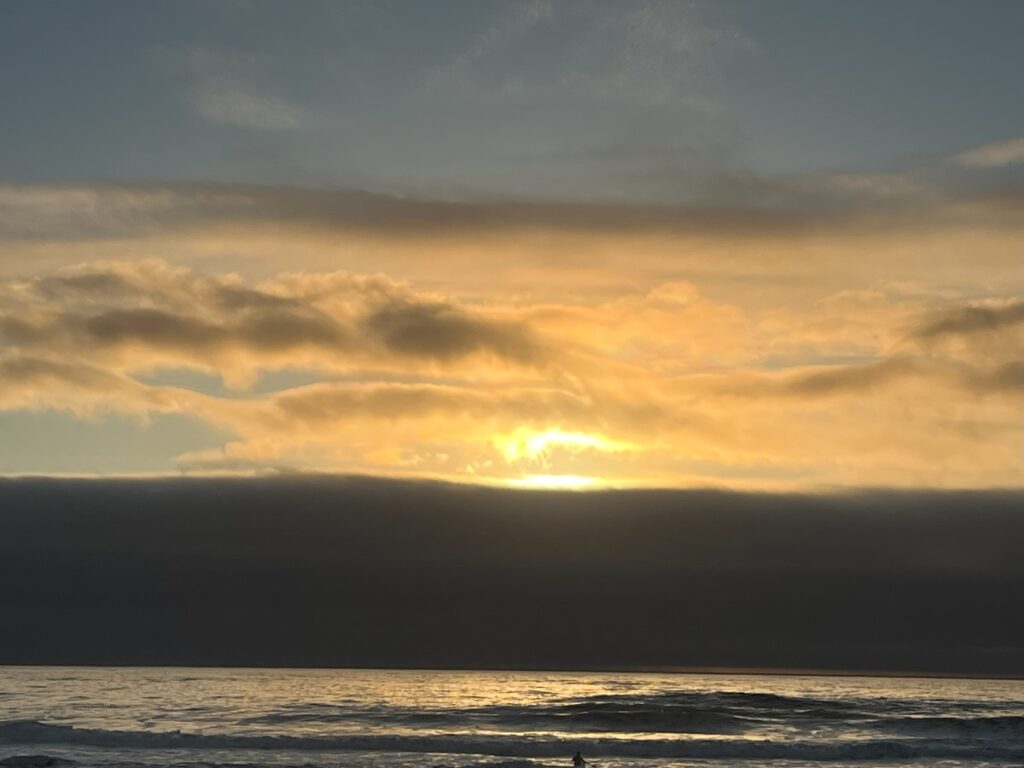
Brad and Charlie (our pup) played on the beach for hours. Then with a glass of wine and Charlie collapsed by our side, we felt the quiet peace as we watched the stunning sunset over the ocean waves. The next morning started with a short excursion to the lush green wonderland of Fern Canyon, one of the park’s must-do hikes. Think Jurassic Park!
There are only 26 campsites in this very desirable campground. I had to sit with my finger over the “reserve” button on the day reservations opened to get a spot. And even then I had to be flexible on the date. Also be aware that it is not easy to get here, Davison Road was a series of tight hairpin curves with 2 way traffic on a narrow one lane road. Yes, I put my pretend passenger’s brake through the floor several times!
Bonus: the campground has solar-powered hot showers, flush toilets and wifi, which feel surprisingly luxurious for such a remote spot.
If You Go
- Best season: May through September (though off-peak months offer quieter solitude) You may be surprised to learn that Northern California get’s quite cold in the winter.
- Reservations / Permits: Use ReserveCalifornia (sites open 6 months in advance).
- Note: Davison Road to Gold Bluffs is a rough, single-lane, dirt route. RVs over 24 ft and trailers are not allowed.
- Day-use permits are required for Fern Canyon (May 15–Sept 15) and are included with your campground reservation.
- Amenities: Solar showers, flush toilets, wifi near bathrooms, fire rings, picnic tables, bear lockers.
- Size / tent limits: Tent sites and small campers / RVs up to ~24 ft (no trailers)
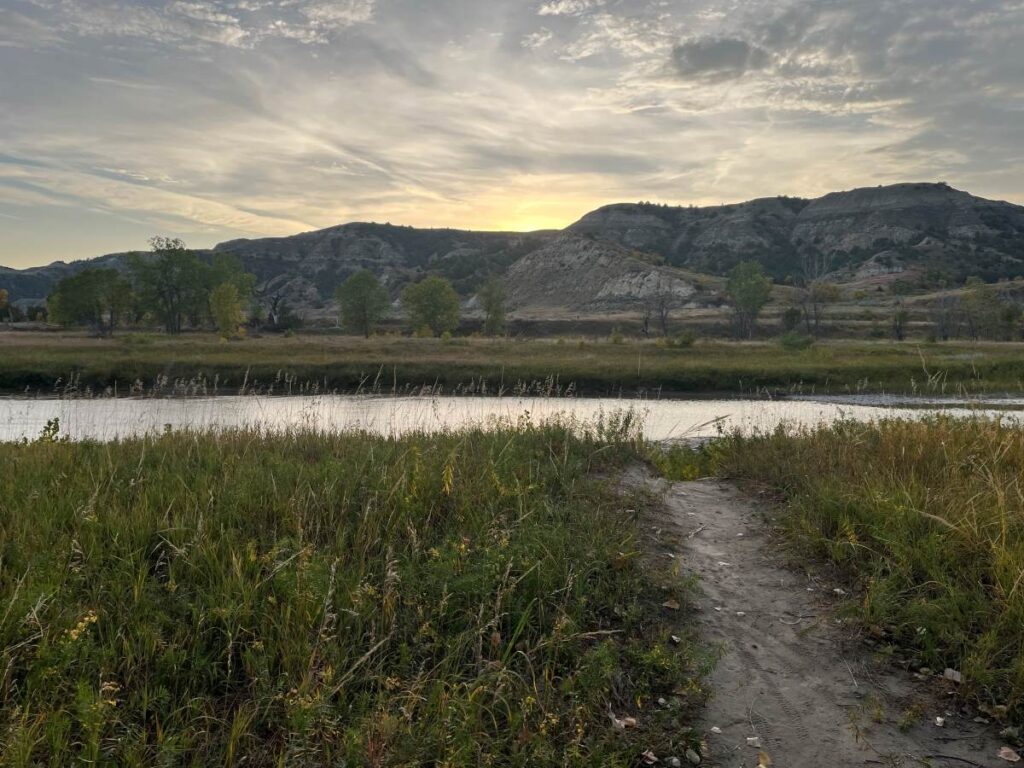
2. Cottonwood Campground – Theodore Roosevelt National Park, North Dakota
his quiet gem along the Little Missouri River is all about wide-open skies and wildlife encounters. When my friend Mary (Reflections Around the Campfire) shared that this was one of her favorite National Parks, I had my doubts because no one ever talks about this park. Boy was I wrong!
Most campsites are spacious with cottonwoods and undergrowth separating them for a bit of privacy. The best campsites in Cottonwood Campground border the Little Missouri. Here you get a relaxing view of the prairie. And sunset brings quite a show as the light enhances the color gradient across the badlands. My favorite moment was watching Brad sip his morning coffee at our campsite while he observed a bison waded through the river nearby.
The large, flat sites can accommodate big rigs up to 65 feet, but the vibe remains slow-paced and serene. We met several campers who were here for an extended stay because they loved the mood. So bring your chair, your book, and your camera because you’ll want to linger.
Bonus: This campground accommodates large rigs — a rarity among our favorite spots — so you don’t have to give up your vehicle dreams to enjoy wild camping. Also, unless you have a big rig or need an accessible spot, avoid the first few campsites. They sit on the edge of the parking lot and lack the peace you feel in the rest of the campground.
If You Go
- Best season: Mid-May through end of September tends to be full season.
- Reservations / Notes:
- Some sites accept reservations via Recreation.gov up to 6 months ahead; others remain first-come, first-served.
- Arrive early if using first-come sites, especially on weekends.
- Amenities: Vault and flush toilets, picnic tables, fire rings. No hookups.
- Size / tent limits: Sites are large enough for up to 65-foot rigs in many spots (unique for this list).
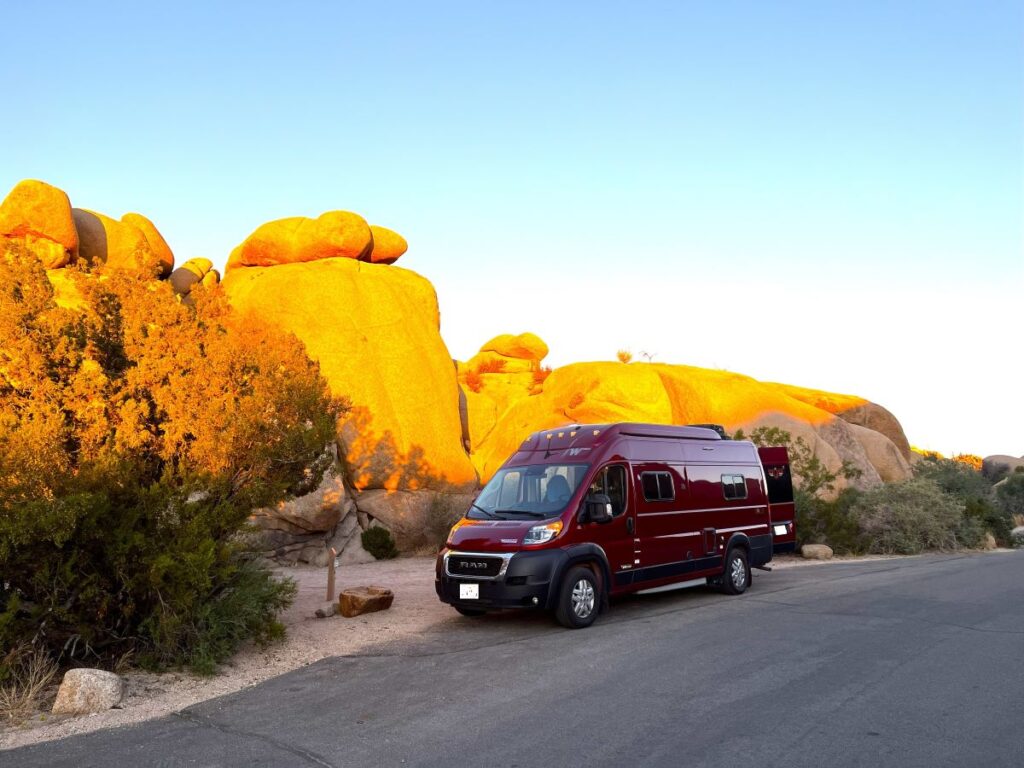
3. Jumbo Rocks – Joshua Tree National Park, California
If you ever wanted to camp inside a natural playground, this is the place. Joshua Tree is renowned for it’s rock climbing, and the sites at Jumbo Rocks, nestled among massive boulders, sets the stage. These are huge boulders, some two to four stories high. Each spot feels tucked away in its own little world. Kids (and adults) spend hours scrambling over the rocks, and the sunsets viewed from a boulder top are unforgettable. It’s one of the most unique desert camping experiences you’ll ever have.
Evening brought the sound of kids laughter echoing off the rock faces in the evening, as they searched for the highest point. We took chairs up top to watch the night sky unfold with a gorgeous display of stars in one of the darkest skies in the country.
One morning, Brad and Charlie quickly disappeared with his coffee. I discovered them atop a boulder watching the sunrise. The silhouettes of other quiet campers, sharing the same moment, were dotted across the giant boulder field.
Camping under a canopy of boulders gives you a feeling of being both sheltered and wild. The privacy of the sites meant you’d rarely catch another camper’s tent or headlamp in your sightline. It felt like a hidden desert retreat of your own.
Bonus: The boulder playground is itself part of the campground so bring a sense of exploration.
If You Go
- Best season: Fall through spring (October–May) when nights are cooler. Summer gets hot. We arrived the 3rd week of September and the ranger told us it was the first week the park was below 90 degrees!
- Amenities: Pit toilets, picnic tables, fire rings. No water.
- Size / tent limits: Check individual site details; most tent-size friendly, some sites wide enough for small campers.
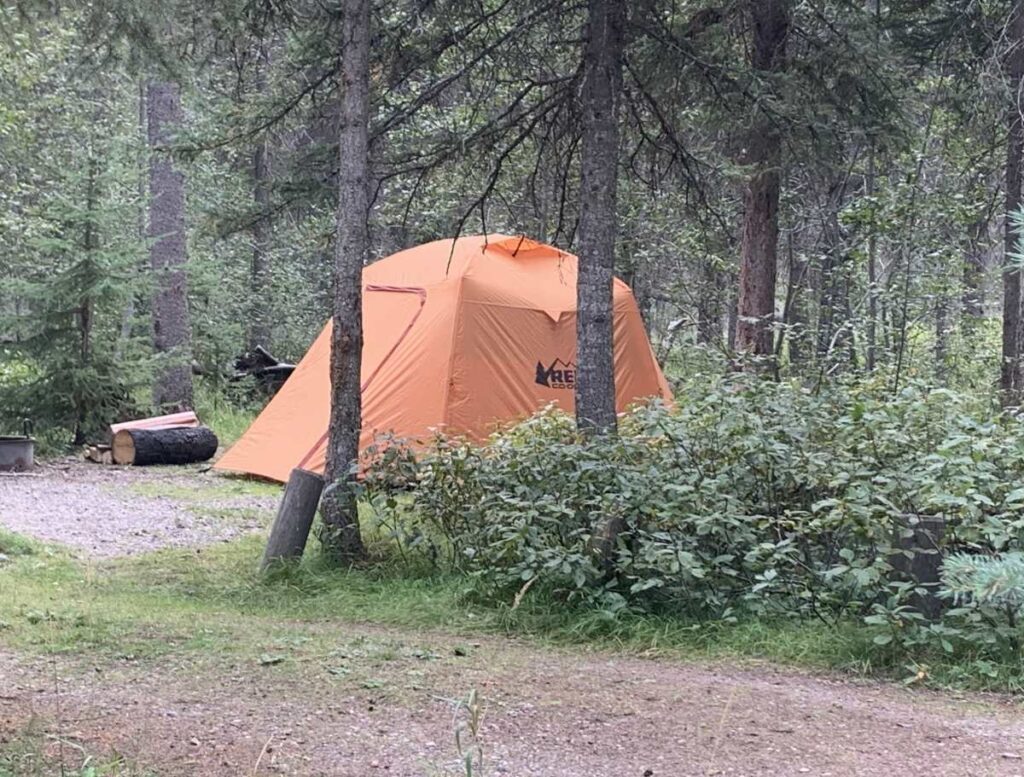
4. Kintla Lake – Glacier National Park, Montana
Reaching Kintla Lake takes some effort. It’s a long, rough drive over dirt roads in Glacier’s remote North Fork region, but the reward is pure solitude. The campground sits on the shore of a crystal-clear alpine lake, surrounded by towering peaks. Nights are peaceful, mornings are misty, and the silence feels sacred. If you crave quiet, this is your spot.
I almost didn’t include this campground because we only spent a day here and had to head back at nightfall because we were hiking the Highline with family the next day. It was way too far to drive for an early morning hike. However, it is such an unique place that fills me with a longing to return that I had to include it for you to consider!
Accessing Kintla Lake feels like stepping into a secret corner of Glacier. The drive is long, over rough roads, so when you arrive, the air seems richer, the sky bluer and the stars sharper. It almost feels like the planet exhales just for you.
Did I mention that this is the extreme wild side of Glacier National Park. Bears, both grizzly and black, frequent the area along with pretty much any other critter you can imagine. So make sure you practice bear safety with your food and supplies. It’s not a place to mess around.
Bonus: The effort to reach Kintla feels like an initiation and once you arrive, the reward is total seclusion.
If You Go
- Best season: Summer (mid-July to mid-September) when snow has melted and roads are passable.
- Reservations / Notes:
- This is a remote campground; know your vehicle limits and check road conditions ahead.
- Be self-sufficient—limited to no services.
- Amenities: Vault toilets, no hookups, sometimes potable water but don’t count on it.
- Size / tent limits: Best for tents or small campers; large vehicles will struggle on access roads
5. Hoh Rain Forest Campground – Olympic National Park, Washington
Yes, you can camp in a rainforest! Sites here are nestled among moss-draped trees and carpets of ferns, creating a scene straight out of a fantasy movie. It’s not the most private campground, but the atmosphere more than makes up for it. At dusk, Roosevelt elk often wander through the campsites, adding to the magic.
Don’t forget to explore the nearby Hoh River Trail as it’s one of Olympic’s most enchanting hikes. We joined a group of kids, mesmerized by the giant banana slug that was sliming across our fern laced trail. And then trapesed on to follow the river through the dense rain forest.
Camping among towering trees and surrounded by massive ferns felt like being inside a living cathedral. This is a beautiful campground with spacious sites ready to welcome you for a relaxing day.
Bonus: The forest provides its own ambiance—no generators needed, no lights beyond headlamps.
If You Go
- Best season: Late spring to early fall (May–September) for milder, drier weather
- Reservations / Notes:
- Many sites are reservable (check Recreation.gov)
- The campground can be rainy even in summer—bring rain gear
- Amenities: Flush or composting toilets, drinking water, picnic tables
- Size / tent limits: Good for tents and small to mid-size campers; some sites less private
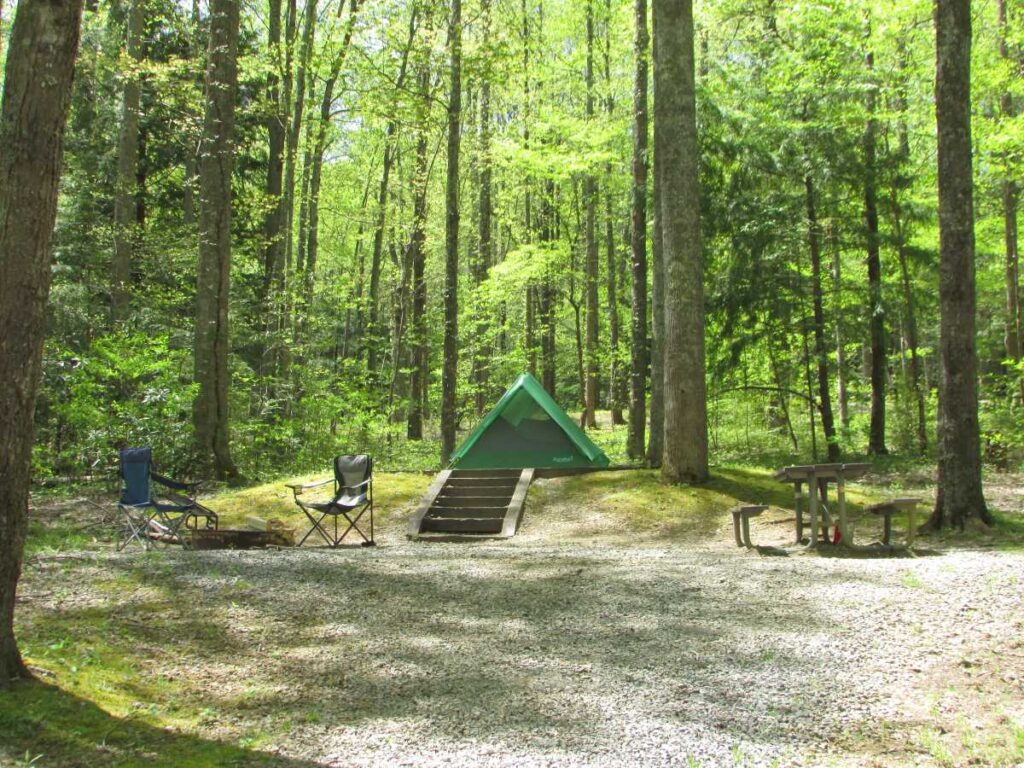
6. Cosby Campground – Great Smoky Mountains National Park, Tennessee
Finding peace in the country’s busiest National Park can be tricky but Cosby Campground delivers. It’s tucked away from the crowds, with spacious tent sites and very few RVs, so you’ll actually hear the sounds of nature instead of generators. It’s the perfect Smoky Mountains escape for those who prefer serenity over crowds.
Several great hikes begin right from camp including one of our favorites: the trail to beautiful Hen Wallow Falls. There is also a lovely nature walk next to the campground.
The gorgeous tree canopy provides ample shade for a very comfortable stay. Most tent sites require a short walk from your car to the well maintained tent pads.
Bonus: Because RV sites are few, generator noise is minimal—so the forest sounds stay intact.
If You Go
- Best season: Spring, summer, and fall (avoid peak crowd weekends if possible)
- Reservations / Notes:
- Sites are reserved via Recreation.gov Note this used to be a first come, first served campground but now requires a reservation. Cell phone is limited so you will have to drive a few miles to book a site if you arrive without a reservation.
- Black bears are fairly pesky in this campground so make sure you are prepared to secure food. Bear boxes are available.
- Amenities: Flush toilets, drinking water, picnic tables, fire rings
- Size / tent limits: Suited to tents and small campers; few RV sites
7. Jedediah Smith Campground – Redwoods National Park, California
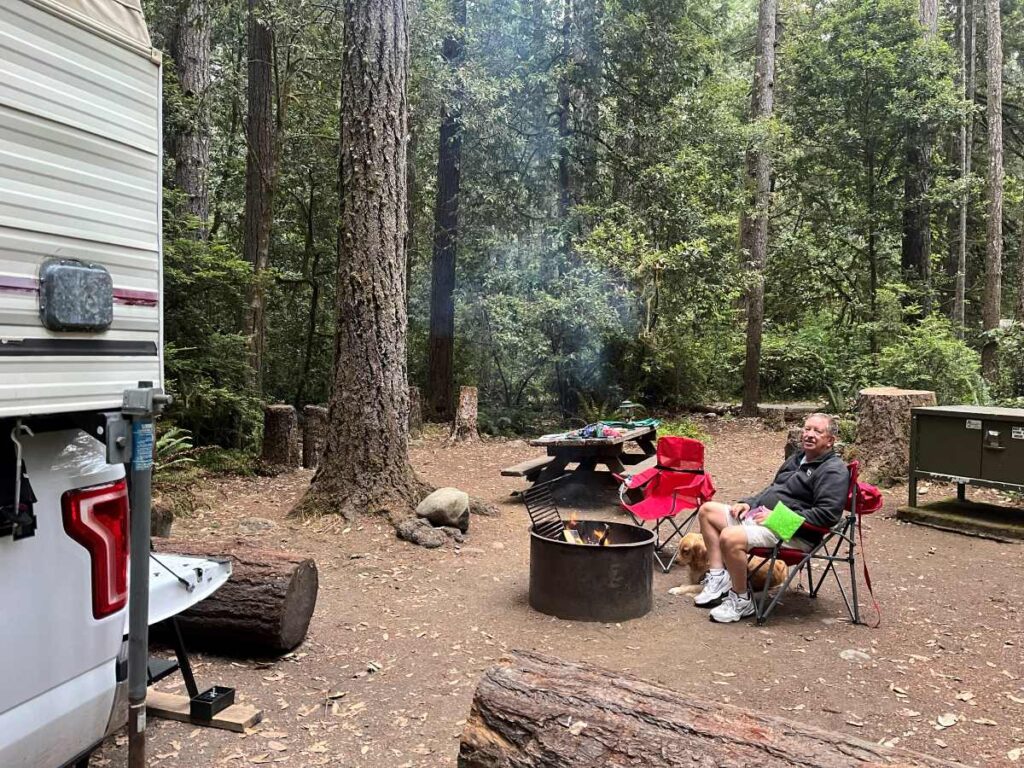
Imagine waking up surrounded by towering redwoods so close you can touch them from your sleeping bag. Jedediah Smith Campground puts you right in the heart of an old-growth forest. While the sites aren’t huge, the sheer size and number of trees create a sense of privacy and wonder. With amenities like hot showers, it’s a great mix of wild and comfortable. Perfect for tents and small campers.
Unlike other dense forests that often feel claustrophobic, the high canopy of the redwoods feel open and welcoming. Here I feel grounded. We loved exploring along the river and standing under the nearby old growth trees.
Bonus: Really nice hot showers and more amenities than primitive sites make this one of the more comfortable “wild” stays.
If You Go
- Best season: Year-round (though winter rains can be heavy)
- Reservations / Notes:
- Reservations recommended via ReserveCalifornia for Jedediah Smith and other front-country campgrounds.
- Amenities: Hot showers, flush toilets, water, picnic tables
- Size / tent limits: Best for tents and smaller campers up to 25 feet.
8. Primitive Roadside Campsites – Big Bend National Park, Texas
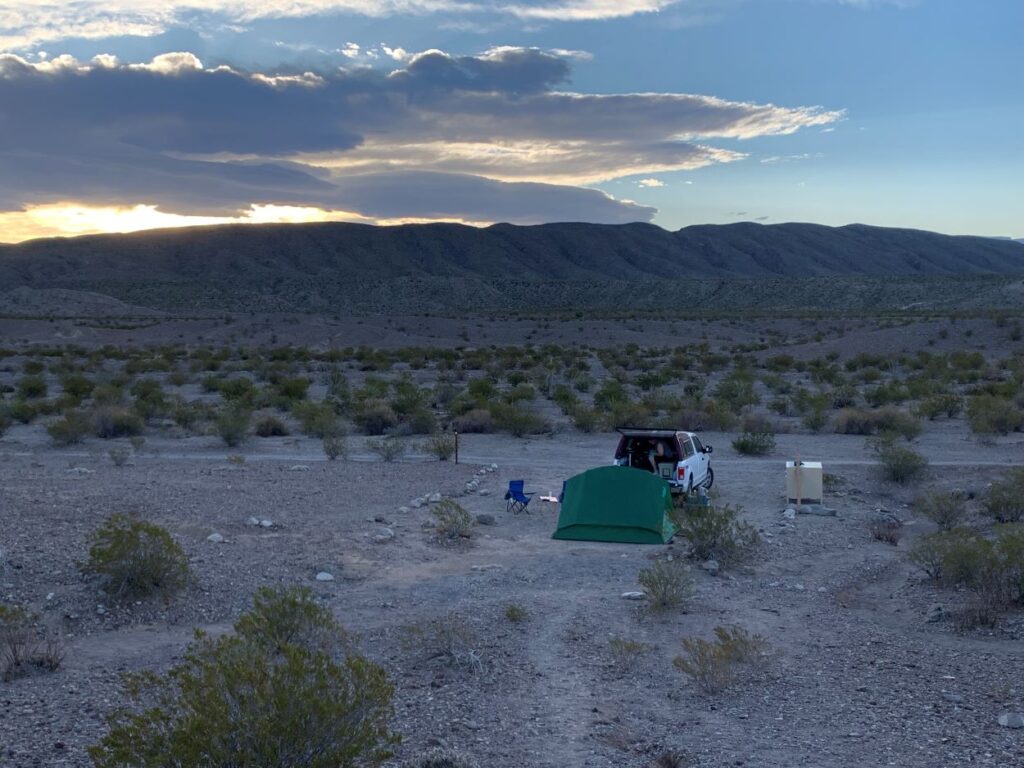
For a true backcountry adventure, these 67 remote sites scattered across Big Bend’s desert are hard to beat. Most require navigating rough, rocky roads, but once you arrive, you’ll likely have the desert all to yourself. We watched the sun set over the mountains and then listened to the kind of silence you only find in the desert. There are no toilets and no hookups. There is just solitude and starlight.
This was the first time we camped in the desert with essentially no neighbors. The rugged road to our campsite was actually frightening. They are serious when they say you need high clearance 4WD for most of these sites. If you are nervous about taking your vehicle down a road like this, look for the primitive sites that are close to the main road where you’ll find better surfaces.
Bonus: The extreme remoteness makes you feel like the only soul in the desert.
If You Go
- Best season: Late fall, winter, or early spring—avoid the heat of summer
- Reservations / Notes:
- The most popular sites can be reserved online in advance. The rest must be reserved at the visitor center on the day you want to camp. Note you need to be there early to get a site as most fill.
- 4WD or high-clearance vehicles recommended (many sites access over rough roads)
- No toilets, no water — pack everything you need
- Amenities: None (primitive)
- Size / tent limits: Tent sites only (or very small rigs if capable of rough access)
9. Moraine Park Campground – Rocky Mountain National Park, Colorado
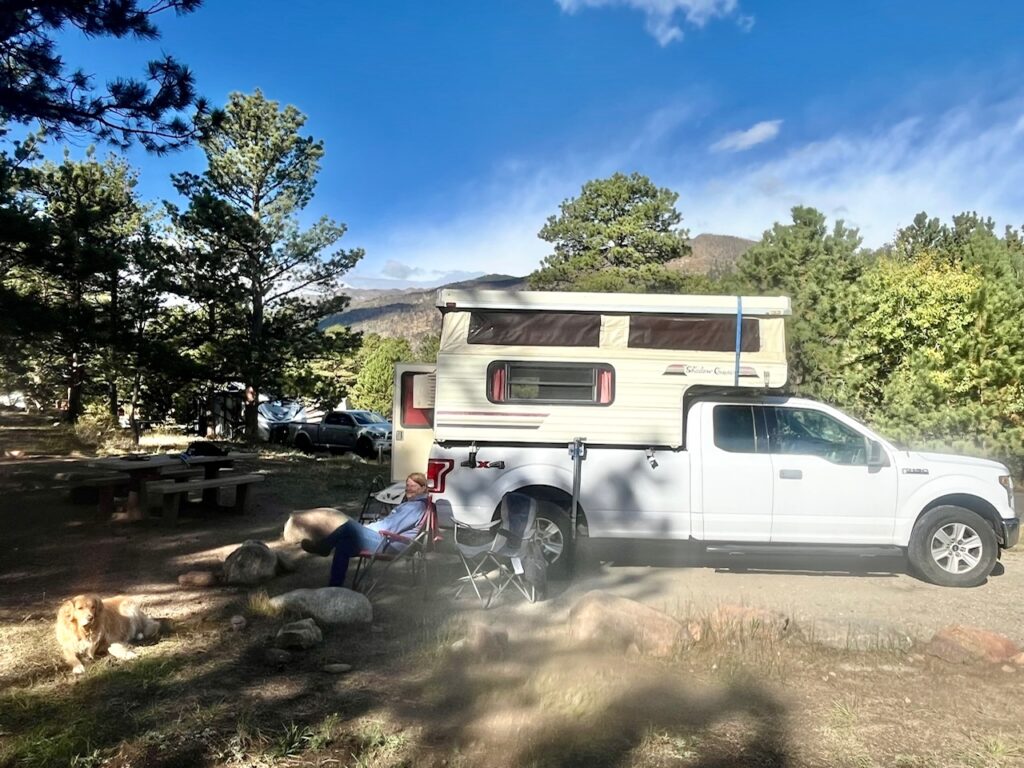
Unlike most on this list, Moraine Park is a larger, more developed campground—but it’s here for good reason. From your campsite, you can hike directly to many of the Bear Lake trails and enjoy prime wildlife viewing. During the fall rut, you can often hear Rocky Mountain elk bugling right from your tent. It’s National Park camping at its most iconic.
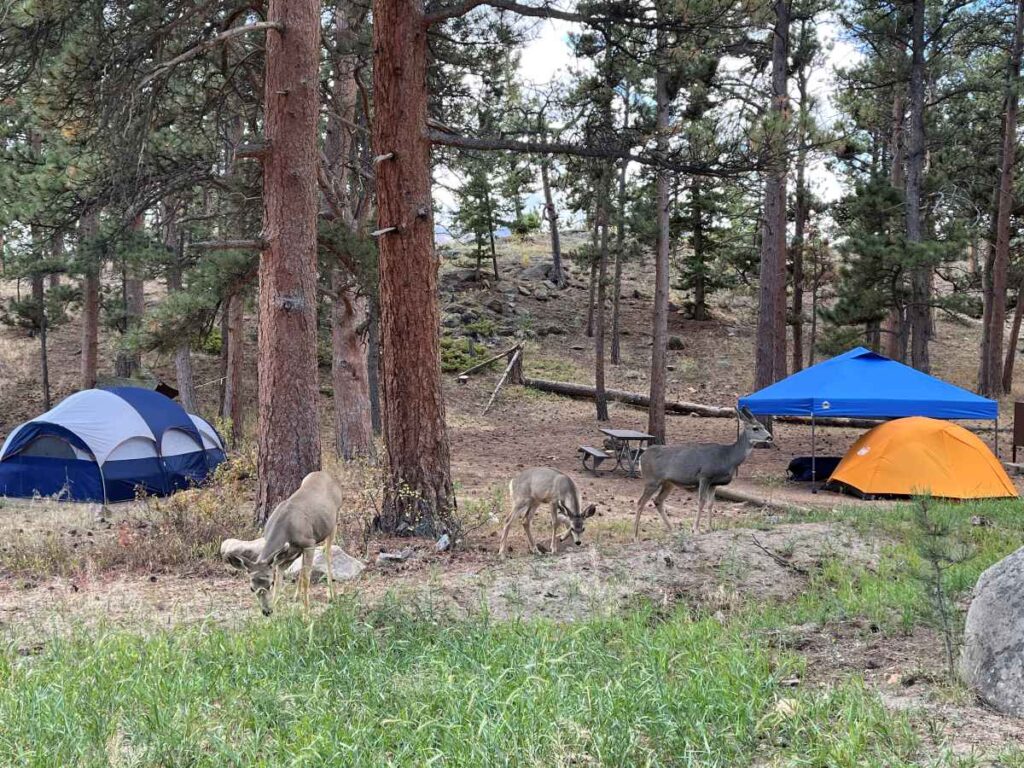
Moraine Park combines access and wilderness. A September trip included elk bugling just across the meadow every night. And during summer trips we always find mule deer exploring our camp. And there was the one time a black bear with cubs explored a neighboring camper’s car. Wildlife everywhere in this campground!
I also loved that you can hike or shuttle straight from camp into the Bear Lake trail system. Camping here allows you to bypass all the reservation requirements to get to some of the most beautiful hikes in the park like Cub Lake or our favorite Sky Pond.
Bonus: You get both comfort (amenities) and front-row access to iconic trails.
If You Go
- Best season: June through September (watch for snow early/late season)
- Reservations / Notes:
- Reserve via Recreation.gov (Moraine Park is a very popular campground)
- Sites fill quickly during summer—book early
- Amenities: Flush toilets, potable water, showers in nearby developed areas, picnic tables, fire rings
- Size / tent limits: Good for tents and small–moderate RVs (check site-specific vehicle length limits)
Final Thoughts
These campgrounds aren’t about luxury. They’re about connection. Connection to the land, to wildlife, and to the quiet moments that make National Park camping unforgettable.
If you love spacious sites, natural beauty, and the occasional elk wandering by, add these spots to your list. And who knows … maybe we’ll meet around a campfire one day, swapping stories of our favorite National Park adventures.
